Enable JavaScript to use the interactive map and save your perspective. You can still read the content below.
· The Tale of Kieu
Truyện Kiều* is a metal book featuring hand-stamped lettering. It recreates the opening 24 lines of Nguyễn Du’s epic poem but omits diacritics; this renders familiar words strange, reflecting the tension between history, contemporary Vietnam, and the nation’s relationship with the wider world.
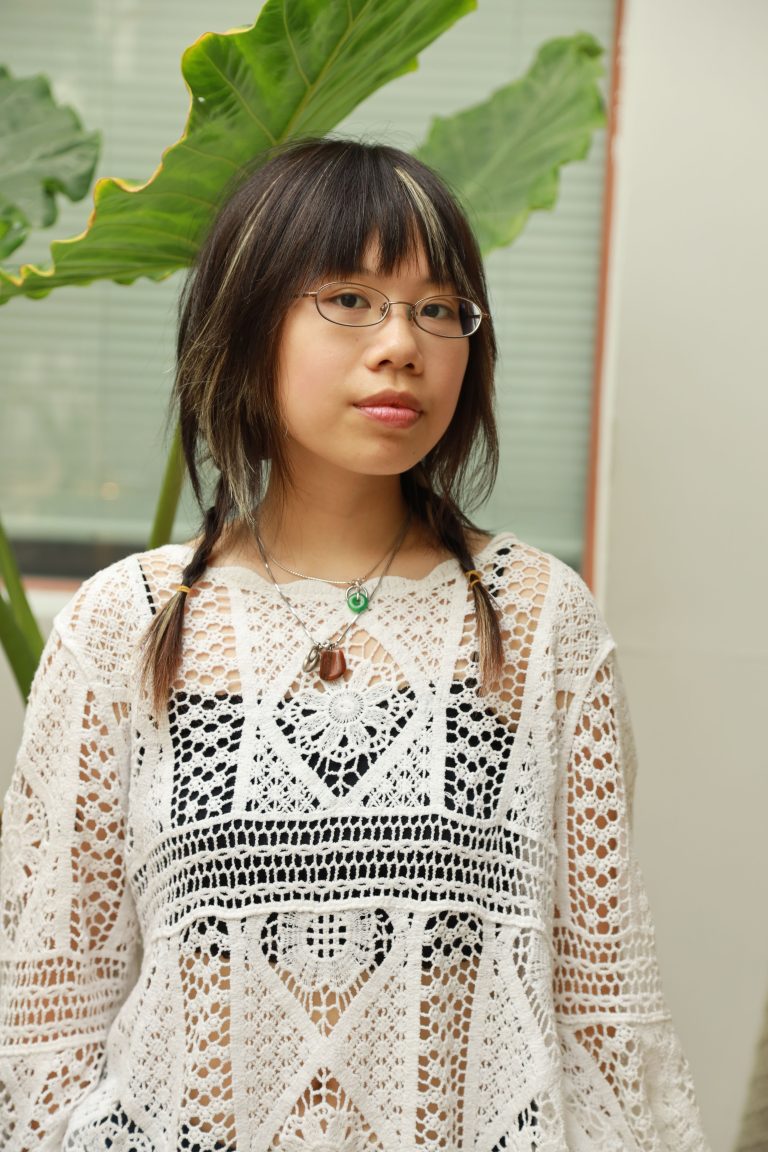
Trixie Gia Hân
Trixie Gia Hân is a sculptor and jewellery student based in Amsterdam. Her practice explores the relationship between individuals and social systems, highlighting contemporary phenomena and emotions that are difficult to articulate or pinpoint.
Website: https://www.instagram.com/pale_.lips
· AI Cannot
Participants are invited to write down human experiences, emotions, and values that they believe AI cannot replicate or replace. The space invites everyone to contribute to a collective manifesto regarding the uniqueness of humanity amidst the constant changes of the AI era.
Thơ Thở x thou thou
Thơ Thở will also collaborate with thou thou to create “What Can’t AI Do?,” an interactive space where participants are invited to write down human experiences, emotions, and values they believe AI cannot imitate or replace. The space invites everyone to contribute to a collective declaration of the uniqueness of our humanity and human connection amid the constant changes of the AI age.
Fanpage: Thơ Thở & thou thou
· AM I?
“Am I?” is a bilingual variety show combining drag, movement, comedy, and live vocals. The show utilizes music, movement, and a unifying theme to delve into the role and destiny of artificial intelligence—a new technology with seemingly limitless power over human life. It presents a vision—whether near or distant—of human attachment, entrustment, and reliance on this technology, raising a question about the vital boundary humanity must set for itself: do we still possess the strength and clarity to remain truly ourselves?
Local Lầy
Local Lầy is a bilingual variety performance collective founded in June 2022. The group is known for shows that blend different art forms with an experimental spirit, exploring unique experiences where East meets West.
Fanpage: Local Lầy
· The Arm
A display featuring a robotic arm that interacts with humans through language. The robot captures natural language requests and comprehends both the conversational context and the physical environment to execute appropriate actions in real-time. Here, The Arm dictates that being functional and productive are more important than being whole.
VGU - The Vietnamese - German University
VIETNAMESE-GERMAN UNIVERSITY (VGU)
Vietnamese-German University (VGU) is a public university established in 2008 through cooperation between Vietnam and the Federal Republic of Germany, bringing together Vietnam’s dynamism and Germany’s academic excellence. VGU connects teaching and research across smart engineering, information technology, business, and economics to address real-world challenges and advance sustainable development.
At Science Fair 2026, VGU presents “Teaching AI vs. AI Teaching,” inviting visitors to explore the relationship between people, education, and artificial intelligence. At its booth, visitors can see an AI-powered robotic arm in action, learn about AI-related degree programmes, and trace the journey from silicon, semiconductors, transistors, and chips to computing, AI, and society.
A series of posters shares VGU students’ perspectives on development, ethics, and environmental concerns in the age of AI. Alongside these displays, interactive STEM activities for children and school students, led by the Faculty of Engineering, make science and technology more approachable, accessible, and engaging, demonstrating how research and education can contribute to everyday life.
THE ARM
A display featuring a robotic arm that interacts with humans through language. The robot captures natural language requests and comprehends both the conversational context and the physical environment to execute appropriate actions in real-time. Here, The Arm dictates that being functional and productive are more important than being whole.
Website: https://vgu.edu.vn/
· Electric Sheep
A dance performance with an original soundtrack exploring the boundary between AI and human sentience.
Mar Studio
Established in 2023, MAR (MOVEMENT ART RESEARCH) is a street dance and yoga studio in Saigon founded by world renowned dancer Son Lam.
Fanpage: Mar Studio
· morphed into a machine
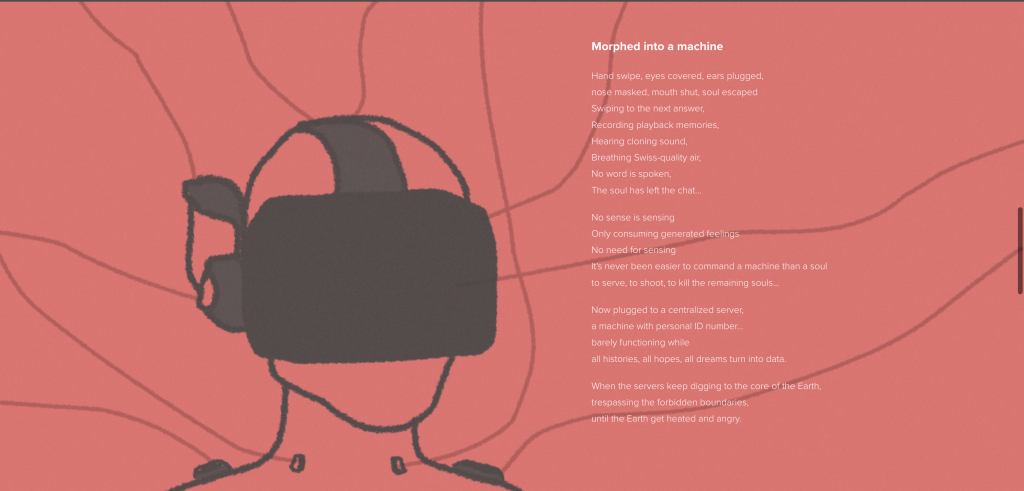
Chau Hoang draws the rage, anxiety and dread for the dominance of advanced technologies with a little hope, dream to reclaim our just and liberated futures. Performance language: Vietnamese—with the original English version projected on screen, accompanied by illustrations drawn by Châu for the zine.
Chau Hoang
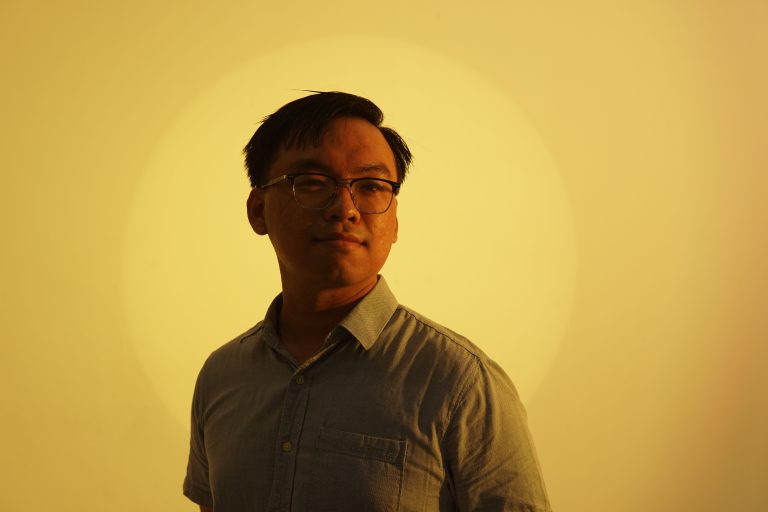
Chau Hoang is a Vietnam-based interdisciplinary designers and artists. Their works explore the ancestral wisdom of plants as a the guidance for resistance against techno-fascism.
Website: https://www.chauhoang.net/
· Human Conditions: Imitation 1, 2, 3, 4
The Human Conditions series poses the question: “What do machines, data, and logic understand about the human condition?” What form do these conditions—persistent across millennia—take when integrated into a vast data network? Through the process of digital fabrication and juxtaposition with reality, what is lost, gained, or distorted in this digital human form?
The four sculptures capture human endeavors, suffering, physical forms, and reflections of the times—spanning both the extraordinary and the mundane. Data regarding the “human condition” is curated and fed into a generative AI model to create 3D forms, ultimately manifesting as digital figures.
Hoàng Phạm Gia Khang
Hoàng Phạm Gia Khang (b. 1999) is an engineer and artist working at the intersection of technology, education, and interactive art. With a background in Computer Science, he uses sensors, data, and automation to build systems that interact with the physical environment. He is currently the CEO of MakerLab VN and co-founder and lead engineer of futile devices collective. Works to which he has contributed as an engineer and systems designer have been exhibited at documenta fifteen (Germany), Thailand Biennale, Vietnam Festival of Creativity & Design, City Tết Fest, and SICF (Japan). He is also a recipient of the 2026 RMIT Vietnam Digital Art and Design Grant.
Website: https://www.instagram.com/hoangphamgiakhang_/
· The Science of Joy
Koichi (b. 1981, Vietnam) is a contemporary artist living and working in Ho Chi Minh City. Engaging primarily with lenticular and neon, Koichi incorporates digital imagery technology to explore themes of cultural hybridity and body positivity. His works engage with a playful fusion of traditional Japanese art with the pulsating rhythms of contemporary pop culture.
Koichi employs AI technology to create images based on his own face, which allows him to further personalise his work, blending technology with his unique artistic vision to produce pieces that resonate on a deeply personal level.
· If it's not you, then it's AI
Huhu Comedy’s sets revolve around how humans confront technology, others, and themselves in the age of AI. Topics ranging from workplace dynamics, cultural and educational perspectives, and family and romance, to anxieties, fears, and frustrations regarding the future, are all explored through a humorous lens.
Huhu Comedy Club
Huhu Comedy Club is a stand-up comedy club founded in March 2024 in Saigon. With a vision of creating a diverse and open space for comedy, Huhu hosts weekly open mics, showcases, and comedy specials, bringing a wide range of themes, perspectives, and humorous takes on everyday life.
Fanpage: Huhu Comedy Club
· VINA/V #05 – THE LIVING CODE PRELUDE
Vietnam Media Lab proudly presents The Living Code Prelude, the opening program leading up to *The Living Code Festival*—a project initiated by the Goethe-Institut.
At Science Fair 2026, this special performance night brings together artists from across Southeast Asia.
Đầu Mì (Vũ Trịnh Hồng Đức, b. 2002) is an artist working between Hanoi and Ho Chi Minh City. Their practice explores questions of inheritance and archival absence. Vietnamese historical archives are often structured around lineage and succession, leaving limited space for lives that exist outside these established lines. Rather than approaching this through rhetoric, Mì works through material and technical processes to reconsider how histories can be recorded, reconstructed, and amended.
trangtraitraicay (Trang Trại Trái Cây) is a jazz musician based in Ho Chi Minh City who produces experimental music under Ingrown Records as well as independently through Fruit Exports. His practice primarily explores ambient, experimental, and field recording genres. He often develops his music through improvisational performances using modular synths, self-recorded samples, or acoustic instruments.
Wasawat Somno (1994, Thailand) is an artist working with code, audiovisual/sound performance, and installation. His practice is organized around the act of mapping — holding two planes of context in tension and tracing what passes between them. A computational system and the ethical questions it quietly carries. A simulation and the physical world it stands in for. An interface and the body that encounters it.
BANMAI is a newly founded collective of four emerging artists—Zetsk, Danice, Vuph_m, and Matt_uy – exploring the intersection of sound, light, electrical devices and visual storytelling. Danice brings modular synth-driven soundscapes; Zetsk, Vuph_m and Matt_uy craft evocative immersive visuals and conceptual art. Their work aims to push the boundaries of contemporary art by examining the connection between light, visual, sound, and electrical engineering to tell compelling stories.
Vietnam_Media_lab
"Bubbles" - An Art Exhibition and Performance Space at Science Fair 2026
A dialogue with the future manifests through various “bubbles.” We often imagine we inhabit a complete, expansive world, yet in reality, we exist within a vast chain of bubbles of information—meticulously designed and personalized for us, established in our perception a pseudo-reality. Sometimes we could be mistaken between the inside with the world outside of those bubbles.
At Science Fair 2026, the “Bubbles” art exhibition and performance space serves as a forum for artists to engage in dialogue through their own concepts and practices – in some senses – their “bubbles.” Artists could be considered as “social indicators,” swiftly reacting to the status quo. How have they navigated the phenomenon of artificial intelligence—through stages of questioning, rejection, experimentation, acceptance, or condemnation?
The “Bubbles” art space and experience at Science Fair is designed to invite the audience to engage with diverse artistic practices. The space is structured around two dimensions: Manual vs. Automated, and Artifactual vs. Non-artfactual. Each artwork occupies a unique coordinate defined collaboratively by the artist and you, the audience.
The Manual–Automated dimension visualizes the boundaries each artist sets for the AI’s role in their creative process. Works range from the entirely manual to the fully automated, with others employing hybrid formulas at varying ratios. Regardless of the degree of agency granted to AI, the defining constants of the work remain the artist’s intention and attention.
The Artifactual–Non-artifactual dimension reveals an intriguing observation. Most works we create in the knowledge and information economy are non-artifactual. These experiences often vanish quickly after emerging—much like performance art or published works—leaving behind only memories once the stage lights dim or the book is closed. To bring them back to life, we must constantly revisit them. We decide whether these non-artifactual experiences should endure by making a commitment to give them form and a physical existence, allowing them to share a tangible space with us.
Exhibited Works
Trixie Gia Hân’s *Truyen Kieu* (The Tale of Kieu)—featuring text embossed onto iron—is perhaps the most laborious method of generating text today: it requires three days of work, four to five hours daily, not counting the time originally spent by the poet Nguyễn Du on the composition itself. *AI Không Thể* (AI Cannot), a collaborative work by Thơ Thở and thou thou, emerged from the “dialogue bubbles” following the Thơ Tính ( (In)human ) creative workshop; it delineates clear boundaries regarding what we—as opposed to machines—create.
Hoàng Phạm Gia Khang attempts to envision a digitized human version through *Tình Trạng Con Người* (Human Conditions), examining how the austerity of our era can be fully translated into 3D-printed sculptures. The “Arm” by the Vietnamese-German University is a robot designed for a specific function, prioritizing efficiency over wholeness.
Performance Works
*Cừu Điện* (Electric Sheep), staged by Mar Studio, explores the boundaries between human and machine through a fusion of Popping and contemporary dance. Poet Chau Hoang expresses a desire to transform and revolt a reality deeply dominated and influenced by technology through a poetry performance titled “morphed into a machine.”
Huhu Comedy examines how humans interact with technology, others, and themselves in the AI era through a humorous lens in the piece “If It’s Not You, Then It’s AI.”
Local Lầy delves deeper into the role and destiny of artificial intelligence in human life through the variety performance “Am I?”, which blends drag, movement, comedy, and live vocals.
The final segment shatters these bubbles, immersing the entire Science Fair 2026 in music and light created by Vietnam Media Lab and artists Wasawat Somno (TH), CRSRCRSRRR (TH), Đầu Mì × Trangtraitraicay (VN), and BANMAI × Hwang Hyu (VN).
Science Fair 2026 - A Dialogue with the Future: AI – Society – Responsibility
The Science Fair is an annual festival celebrating science and culture. Established by the Goethe-Institut Ho Chi Minh City, it serves as a platform where scientists, researchers, educators, artists, businesses, and communities come together to explore contemporary social issues through an interdisciplinary lens at the intersection of science, technology, and culture.
The theme of Science Fair 2026 is “A Conversation with the Future: AI – Society – Responsibility.” Currently, artificial intelligence and large language models impact nearly every field, significantly affecting how we create, work, learn, communicate, and make sense of the world. Yet, beyond all the technological advances, AI raises profound and urgent questions for society regarding fundamental constructs such as ethics, creativity, education, sustainability, and inclusivity, and—most importantly—the future of mankind. The question of how to use AI responsibly is no longer an exclusive concern of tech conglomerates, but an existential matter for all of us.
Despite the profound impact of this topic, much of the current media discourse creates the impression that discussions about AI are reserved exclusively for academics, intellectuals, tech-savvy individuals, and tech companies. A divide is quietly emerging in our understanding of this technology, creating an urgent need for science communication initiatives to bridge the gap.
In response to this situation, the Science Fair 2026 organizers and distinguished partners have adopted the “Dialogue” concept to create a space that fosters a multifaceted understanding of AI technology and its societal impacts among the general public. Here, “dialogue” entails collaborative questioning, listening, debating, and experimenting through various formats.
To address the “digital divide,” Science Fair 2026 is designed around four key criteria: entertaining, informative, intriguing, and inclusive. The diverse range of activities includes panel discussions, science film screenings, interactive workshops, sci-tech experiment booths, showcases of new applied technology, and art exhibitions and performances.
We envision the journey of target audiences at the Science Fair 2026 along a spectrum. At the furthest end are those who do not attend the Science Fair for the sake of science—people who might even shy away at the mere mention of the subject. For them, the “Bubble” exhibition, featuring handcrafted to fully automated installations, alongside novel and exciting stage performances, first catches their attention. When curiosity is sparked, knowledge usually follows.
Slightly closer are non-experts or laypeople. Through panel discussions or debates featuring various speakers, they can grasp the nuances of the AI industry and raise questions of their own. They can learn about AI applications across sectors like business, healthcare, the environment, education, and social welfare, while also reflecting on their own place in an era of thinking machines and how to protect humanity against AI misuse.
For attendees who already rely heavily on AI or large language models (LLMs) in their daily work, the Science Fair offers workshops designed to help them rediscover the joy of wordplay.
Closest to the core are the professionals—scientists, researchers, and educators—for whom this event offers an opportunity to foster interdisciplinary collaboration and advance science communication in Vietnam. Meanwhile, families, children, and students can enjoy a “learning-through-play” experience at various booths and fun science workshops.
In summary, the organizers, partners, and audience members alike co-create this Science Fair. Those who usually avoid science are not dismissed as uninformed; LLM users are not perceived as victims of technology; and professionals no longer feel isolated. Everyone has a place to immerse themselves in science and join the shared conversation.
Science Fair 2026 is co-created by Goethe-Institut Ho Chi Minh City, artLIVE, and The Too Blue Scientist with many other distinguished partners.